There are games you finish and immediately want to talk about with someone. Life is Strange: Reunion is one of those. I sat with the ending for a long time — not because I was confused, but because it hit somewhere quiet and deep, the way only the best storytelling does. If you’re here wondering whether Reunion earns its place in the Life is Strange legacy, grab a coffee. Let’s talk.
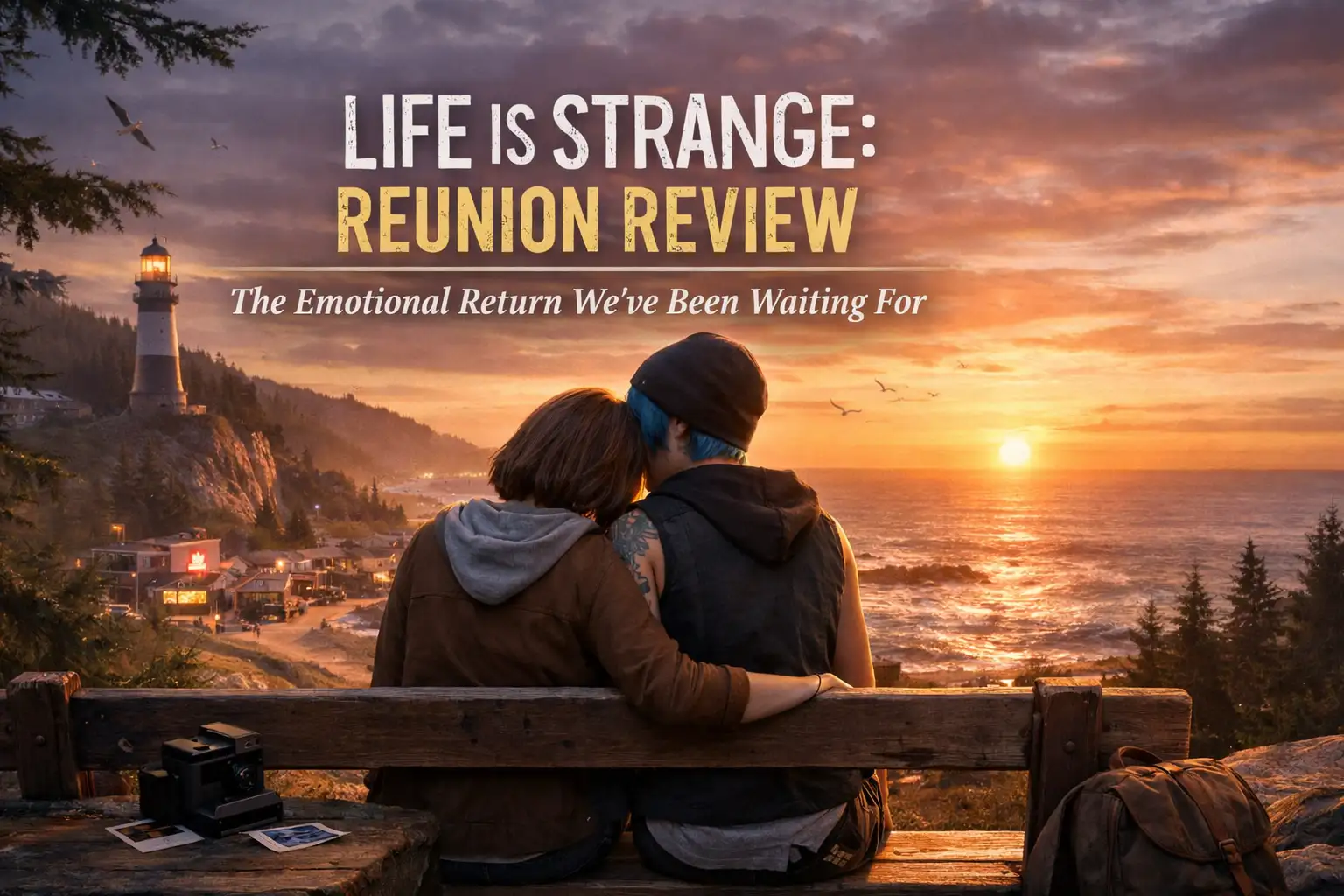
What Is Life is Strange: Reunion? A Quick Setup for New Players
Before diving into the review, a quick word for anyone who stumbled here without knowing the full picture. Life is Strange: Reunion is a narrative adventure game that revisits familiar emotional territory — fractured relationships, supernatural mechanics, and the particular weight of choices that can’t be undone. It builds on the DNA of the original series while carving out its own identity.
If you’ve never played a Life is Strange game before, think of it as an interactive novel with a strong visual identity and a soundtrack that absolutely does not miss. If you have played the originals, you already know the emotional stakes involved. Reunion delivers on those stakes in ways that feel both familiar and genuinely surprising.
Life is Strange Reunion Story Review: Does the Narrative Hold Up?
Here’s the thing about Life is Strange as a franchise — the gameplay has always been secondary to the story. Nobody picks up these games for the puzzle mechanics. They pick them up because the characters feel real, the emotional beats land with precision, and the world is drawn with enough care that you actually start to grieve fictional places.
Reunion continues this tradition with confidence. The central narrative — which I’ll keep spoiler-light here — orbits around the concept of reconnection. Not in a saccharine, everything-is-fine way, but in that honest, slightly uncomfortable way that real reunions tend to go. You know the feeling. Running into someone you lost touch with. The pauses that say more than words. The realization that time changes people differently.
The writers clearly understood that nostalgia is complicated. Reunion doesn’t hand you warmth and comfort — it makes you earn the emotional payoff, and when it arrives, it lands all the harder for it. There are sequences in the second act that genuinely surprised me with their restraint. Less is more, and the team clearly trusted their audience enough to sit in silence when silence was the right choice.
Character Development in Reunion: Familiar Faces, New Wounds
One of the trickiest things about any sequel or spiritual successor is what to do with legacy characters. Bring them back unchanged and they feel like museum pieces. Change them too much and you alienate the players who loved them to begin with.
Reunion threads this needle well. The characters we reconnect with carry visible history. You can see where life has shaped them — the small hesitations, the humor that covers old pain, the ways they’ve rebuilt themselves around the cracks. It feels earned rather than manufactured.
The new characters introduced alongside them are equally strong. There’s a mentor figure whose arc I won’t spoil but found genuinely moving. And a secondary character — someone you might initially dismiss as comic relief — who ends up carrying one of the most quietly devastating storylines in the game. Pay attention to them early.
Life is Strange Reunion Gameplay Review: Choice, Consequence, and the Time Mechanic
Let’s address the elephant in the room: the supernatural mechanic. Every Life is Strange game has one, and Reunion’s is both intuitive and thematically resonant. Without going into spoiler territory, the mechanic ties directly into the game’s central themes in a way that feels organic rather than bolted on. By the time you fully understand how it works, you realize it was doing storytelling work the entire time.
Gameplay-wise, Reunion sits comfortably in the series’ established rhythm — explore, interact, uncover, choose. The puzzle elements are present but never frustrating. This is a game that respects your time. It wants you thinking about the story, not stuck trying to figure out where you’re supposed to click next.
The choice system is as morally textured as you’d expect. Very few decisions feel like obvious good/evil binaries. Most of them are the kind where you pause, think, and then make a call you’re not entirely sure about — which is exactly right. Real choices feel like that. You’re not being asked who the villain is. You’re being asked what you actually value when two good things conflict.
How Long Is Life is Strange: Reunion? Pacing and Episode Structure
For those planning their weekend around this one — Life is Strange: Reunion runs approximately 8 to 12 hours depending on how thoroughly you explore and how long you sit with scenes before progressing. It’s structured episodically, which works in its favor. Each episode ends with enough resolution to feel satisfying while pulling the thread tighter for what comes next.
The pacing is confident throughout. There’s no padding, no filler content inserted to artificially inflate playtime. Each scene is doing something — advancing plot, deepening character, building atmosphere, or usually all three at once. The middle section is the strongest, which is unusual; most narrative games sag in the middle. Reunion accelerates there instead.
Life is Strange Reunion Art Style and Visual Design: Beautiful in Every Frame
I want to spend some time here because the visual design deserves it. Life is Strange: Reunion is genuinely gorgeous — not in a technical showpiece way, but in the way that a well-composed photograph is gorgeous. The art direction makes thoughtful use of color temperature to communicate emotional states. Warm golds and soft amber in the hopeful moments. Desaturated blues and hard edges when things go wrong. It’s subtle enough that you might not consciously register it, but your emotional response will.
The environments are dense with detail. The kind of detail that tells stories without dialogue — a faded photograph pinned to a bulletin board, a book left open to a specific page, a window left slightly ajar in someone’s childhood bedroom. These small touches accumulate into a world that feels lived-in rather than built.
Character animation has also improved significantly from earlier entries. Facial expressions carry nuance now. You can read hesitation, suppressed emotion, and the specific way someone smiles when they’re pretending to be okay. That level of animation craft does real work for a story that depends so heavily on interpersonal tension.
Life is Strange Reunion Soundtrack Review: Music That Earns Its Emotional Weight
The Life is Strange franchise has always had an exceptional relationship with music. Reunion continues this tradition with a score that knows when to step forward and when to step back.
The licensed tracks are well-chosen — indie folk, ambient electronic, a couple of unexpected left turns that somehow work perfectly in context. But the original score is where Reunion really distinguishes itself. There are recurring motifs that evolve across the game, subtly changing in harmony and instrumentation as characters develop. It’s the kind of compositional thinking that you might not notice explicitly but absolutely feel.
A few tracks are guaranteed earworms. I found myself humming one of them in the grocery store a week after finishing the game, which is either a testament to the music or a comment on my extremely average life. Probably both.
Life is Strange Reunion Review: What Works, What Doesn’t
No honest review ignores the rough edges, so let’s talk about them briefly.
The first episode takes longer than it should to establish its stakes. If you’re someone who bounced off earlier Life is Strange games because the openings felt slow, you may need to push through roughly 90 minutes before Reunion fully locks in. It does lock in — but the patience required is worth noting.
There are also one or two choices in the final act where the consequences feel slightly underwritten — like the writers knew where they needed the story to end and the path getting there needed a bit more breathing room. It doesn’t undermine the overall impact, but you may notice the seams.
On the positive side — and there is significantly more positive than negative here — Reunion demonstrates that this franchise still has a genuine emotional range that most games simply cannot match. It’s warm when warmth is appropriate and devastating when devastation is earned. The final hour is among the best the series has produced.
Is Life is Strange: Reunion Worth Playing in 2026? Final Verdict
Short answer: yes, without much hesitation.
Longer answer: Life is Strange: Reunion is exactly the game this franchise needed at this moment. It doesn’t try to reinvent the wheel or chase trends. It focuses on what Life is Strange has always done best — telling human stories about connection, loss, and the messy space between who we were and who we’re becoming.
For returning fans, it offers the emotional familiarity of coming home alongside enough new material to feel fresh. For newcomers, it functions as a strong entry point that rewards engagement without demanding you’ve done prerequisite homework.
In a gaming landscape that sometimes feels crowded with noise, Reunion is quiet in the best possible way. It knows what it wants to say and it says it with care. That’s rarer than it should be.
Score: 8.5 / 10
A thoughtful, emotionally intelligent narrative adventure that honors its legacy while finding genuine new ground. The slow start is the only real barrier — push past it and you’ll find something worth finishing.
Life is Strange Reunion — Frequently Asked Questions
Do I need to play previous Life is Strange games before Reunion?
Not strictly, no. Life is Strange: Reunion is designed to be approachable without prior series knowledge. That said, returning players will find additional layers of meaning in certain character moments and callbacks. If you have the time, playing the original Life is Strange first adds genuine emotional depth to the Reunion experience.
How many endings does Life is Strange: Reunion have?
Reunion features multiple endings shaped by your choices throughout the game, consistent with the series’ design philosophy. The major endings differ meaningfully in emotional tone and character resolution — this isn’t a case where the differences are cosmetic. Your decisions across all episodes carry genuine weight in the finale.
What platforms is Life is Strange: Reunion available on?
Life is Strange: Reunion is available on PC (Steam and Epic Games Store), PlayStation 5, PlayStation 4, Xbox Series X/S, and Xbox One. A Switch version has been referenced in developer communications — check the official channels for the most current platform availability as this may have been updated since publication.
Is Life is Strange: Reunion suitable for younger players or those sensitive to emotional themes?
Reunion deals with grief, estrangement, and loss in ways that are emotionally mature without being graphic. Like previous entries in the series, it handles sensitive themes with care and intention. Parents should be aware of the emotional weight involved — this is a game that can genuinely affect you. Content warnings are available in the game’s main menu.
How does Life is Strange: Reunion compare to the original Life is Strange?
Reunion is a stronger technical production with notably improved animation and a more confident visual identity. The original game has a rawness and a specific kind of nostalgia that Reunion can’t quite replicate — partly because that rawness was partly a product of being first. Reunion is more polished. Whether that makes it better depends on what you value most in this type of game.
Does Life is Strange: Reunion have any connection to Life is Strange: True Colors?
There are thematic and tonal connections between Reunion and True Colors — both share a focus on empathy as a narrative and mechanical theme. Specific story connections are present in the background lore for attentive players. Neither game requires the other, but they reward each other in the way a good anthology series rewards familiarity.
Is the Life is Strange: Reunion soundtrack available separately?
The original score for Life is Strange: Reunion has been made available on major streaming platforms and as a digital download through music stores. The licensed tracks are typically available independently through their respective artists. The soundtrack is genuinely worth listening to outside the game — it holds up well as standalone ambient/indie listening.
Conclusion: Life is Strange Reunion Deserves Your Time
There aren’t many games that make you feel something real anymore — something that sits with you after the screen goes dark. Life is Strange: Reunion is one of the ones that does. It’s not perfect, but it’s honest. And in the particular genre it’s working in, honesty counts for a great deal.
If you’ve been on the fence, consider this your gentle nudge. Clear an evening, find somewhere comfortable, and let Reunion do its thing. You probably won’t regret it.
Have you already played it? Drop your thoughts in the comments — I’d genuinely love to talk about the ending with someone.